Save The Pets
Brave LabsPuzzle
4.31.18K Reviews
- Version
- 3.9.5
- Installs
- 50.00M
- Age Rating
- Everyone
Screenshots
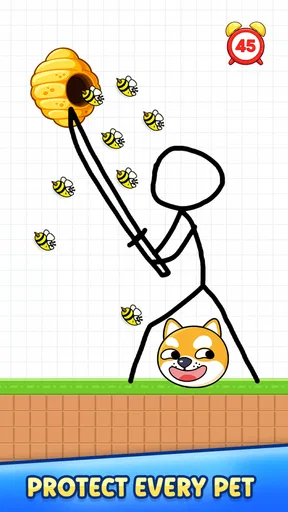
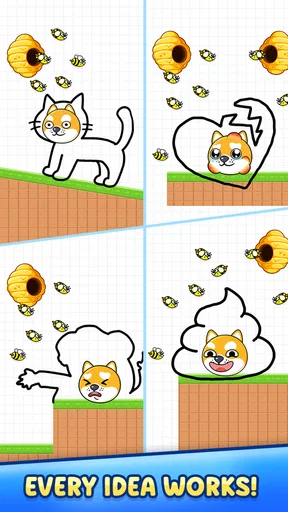

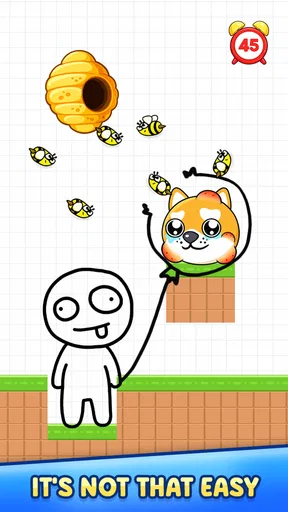
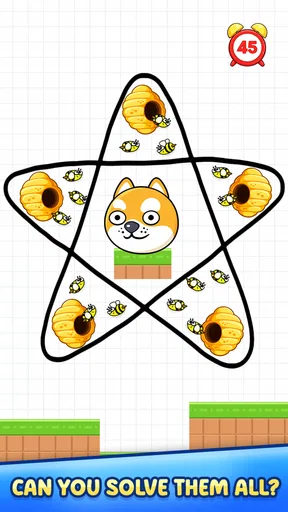
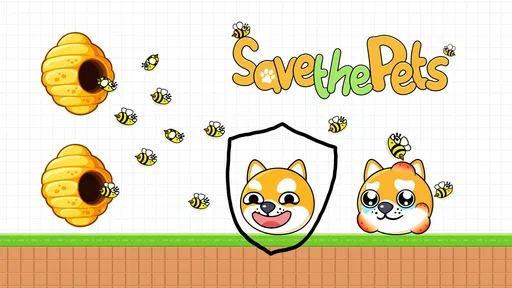
Our Review of Save The Pets
 Analysis by Appyee
Save The Pets is a puzzle game from Brave Labs that turns a simple question into a surprisingly persistent challenge: can I protect the animals before the level’s hazards reach them? I found it easiest to enjoy when I treated it as a short-session game rather than a grand adventure. A level can be approached while waiting for a bus, during a coffee break, or whenever I want something more active than scrolling, yet less demanding than a full-length strategy game.
My overall view is positive, with one important qualification. The game’s appeal comes from quick visual problem-solving and the satisfaction of finding a clean solution, not from a deep story or a large collection of long-term systems. If you like puzzle games that ask you to observe first and act second, it is an easy recommendation. If you need constant novelty, detailed progression, or a strong narrative reason to keep playing, its straightforward design may feel limited.
Why the rescue puzzles work so well
The best part of the experience is the compact decision-making. I am not simply tapping through a passive sequence; I have to look at the arrangement, identify the danger, and decide what action is likely to keep the pets safe. That makes even a short play session feel purposeful. The central idea is friendly enough for younger players, but the challenge can still make an adult pause before committing to a move.
What I particularly like is the way the game encourages a brief planning habit. My first instinct is often to react to the most obvious threat, but that is not always the smartest choice. I get better results when I scan the entire screen, consider what may happen after the first interaction, and then act. That small change in approach is one of the game’s strongest teaching points: careful observation usually beats hurried tapping.
The presentation also supports that style of play. The pets give the objective an immediate emotional focus, so failure does not feel like moving an abstract shape into the wrong place. At the same time, the concept remains light and accessible. I never felt that I needed specialist knowledge before starting, which is important for a puzzle game intended for a broad audience.
Brave Labs has kept the basic premise easy to understand, and that clarity matters on a phone. I can open the game and know what I am trying to accomplish without reading a long explanation. That makes it a useful choice for casual players who want to begin quickly, while the puzzles themselves provide enough resistance to stop the experience from becoming completely mindless.
A good fit for short, focused sessions
In everyday use, I think the game works best in small bursts. Imagine having ten minutes before an appointment. A large role-playing game would be awkward because you may need to remember a quest, manage equipment, or find a safe stopping point. Save The Pets is more suitable for that situation because the focus is narrow: study the puzzle, make a decision, and move on when you are ready.
That structure also makes it a reasonable option for family play. A child can explain what appears to be happening, while an older player can encourage a slower approach instead of immediately giving away the answer. I would still let the child’s reading ability and comfort with mobile controls guide the decision, but the Everyone content rating makes the game broadly approachable for general audiences.
There is another useful angle here: the game rewards discussion without requiring competition. Two people can look at the same puzzle and suggest different solutions, which makes it more social than a solitary store summary might suggest. I enjoyed asking myself, “What will happen if I do this first?” That question turns a quick level into a small shared reasoning exercise when someone is sitting beside me.
Where the challenge feels meaningful
A puzzle is satisfying when the solution feels understandable after I see it, even if I did not notice it immediately. Save The Pets benefits from that kind of learning curve. I can make a mistake, reconsider the layout, and return with a better plan. The important distinction is that the game’s appeal is not just winning; it is noticing why a particular sequence works.
For that reason, I recommend resisting the urge to tap randomly. Random attempts may occasionally succeed, but they weaken the main pleasure of the game. I get more from each stage when I first identify the pet’s vulnerable position, then check which objects or hazards could interfere, and only afterward start interacting. This is a simple habit, but it makes the puzzles feel more deliberate and can reduce unnecessary frustration.
Another practical tip is to treat an early failure as information rather than a verdict. If the pet is not saved, I try to remember the exact point where the plan broke down. Was the first move too aggressive? Did I overlook a second danger? Did I focus on the pet and ignore the route around it? That kind of quick review is more effective than repeating the same sequence with faster taps.
The game is at its strongest when it rewards patience without making the player feel punished for experimenting. That balance is important in a mobile puzzle. I want enough pressure to make a decision matter, but I do not want a single error to make the entire experience feel hostile. Save The Pets generally aims for the welcoming side of that balance, which helps explain its broad appeal.
What may hold it back over time
The same simplicity that makes the game approachable can also become its main weakness. Players who expect a rich campaign, complicated character development, or a large strategic sandbox may find the experience too focused. The rescue premise provides motivation, but it does not replace the variety of a story-driven game. I would not choose this as my only mobile game if I wanted a deep long-term hobby.
I also think the game is more dependent on the quality of its puzzle variety than many casual titles. Once I understand the basic way of examining a level, familiar patterns can lose some of their surprise. That does not make the game poor, but it means my enjoyment depends on whether new situations continue to ask different questions. Someone who plays for a few minutes at a time may stay engaged longer than someone who tries to consume a large amount of content in one sitting.
The free-to-play structure deserves a realistic look as well. The game costs nothing to download, while optional purchases range from ninety-nine cents to one dollar and ninety-nine cents per item. That is not automatically a problem, but I would still make a personal rule before playing: enjoy the puzzles first and only consider spending if the available extras genuinely improve my experience. Casual puzzle games are easiest to enjoy when purchases remain optional rather than becoming part of the decision-making pressure.
Parents may want to establish that expectation clearly for younger players. The Everyone rating makes the game suitable for a broad age range, but an age rating does not itself explain how a child will respond to optional purchases. I would show a child how to ask before buying anything and, where appropriate, use the device’s purchase controls. That keeps the game’s friendly rescue theme from being mixed with an avoidable billing surprise.
How it compares with other puzzle choices
Compared with a traditional matching game, Save The Pets asks me to think more about cause and effect. A matching title is often built around pattern recognition, board clearing, and score improvement. Here, the important question is more situational: which action protects the pet, and in what order should I take it? I prefer this when I want a puzzle that feels like a small problem to solve rather than a rhythm of repeated combinations.
Compared with a physics-based puzzle, the appeal is similarly immediate but the emotional framing is different. Physics games often make experimentation the main attraction, with amusing failures and unexpected movement. Save The Pets gives that experimentation a clearer objective. I am not merely testing what an object does; I am trying to keep a vulnerable character out of danger. That makes the game feel more purposeful, although players who love elaborate physical interactions may prefer a more simulation-heavy alternative.
It also differs from large logic games that present long rule sets or increasingly technical challenges. I can recommend this one to someone who wants a gentler entry into puzzle gaming. On the other hand, a dedicated puzzle fan searching for complex deduction, layered systems, or extensive customization may eventually want something more demanding. The right comparison is not “better or worse”; it is whether I want a friendly rescue problem or a more formal brain-training experience.
Who should play it, and who should skip it
I would recommend Save The Pets to casual players who enjoy visual puzzles, parents looking for an accessible game to discuss with children, and anyone who wants a quick mental break with a clear objective. It is also a good choice for people who dislike games that bury the basic idea under menus, equipment, or complicated progression. The free entry point makes it easy to test without committing money upfront.
I would be more cautious about recommending it to players who need a strong plot, competitive rankings, or a detailed sense of character growth. It is not the game I would open when I want a long evening of exploration. Likewise, if repeated puzzle formats quickly lose their appeal for you, the focused structure may feel narrow. In that case, a broader logic collection or a story-led adventure would probably offer more variety.
The game’s popularity suggests that it has reached a substantial audience: it has an average rating of 4.3 from around 215 thousand ratings and more than 50 million installs. Those figures do not guarantee that every player will enjoy it, but they do fit my impression of a polished, approachable casual puzzle rather than an obscure experiment. Brave Labs has also continued to maintain the Android release, with version 3.9.5 available for devices running Android 7.0 or later.
That compatibility is useful for people with older Android phones, although I would still keep expectations realistic about performance on aging hardware. A puzzle game does not need the technical demands of a visually intensive action title, but smooth input matters when the outcome depends on a precise tap. If controls ever feel inconsistent, I would first check whether other apps are consuming resources and whether the device needs a restart before blaming the puzzle itself.
Small habits that improve the experience
My first recommendation is to slow down at the beginning of every stage. The opening view often contains more information than the first obvious threat. I look for safe spaces, possible chains of events, and anything that could block a rescue route. This takes only a few seconds, yet it changes the game from trial-and-error tapping into a more satisfying planning exercise.
Second, I try not to judge a solution by how dramatic it looks. A move that appears to remove the biggest danger may create another problem elsewhere. I prefer the least risky sequence rather than the most visually active one. That is a useful distinction for younger players too: the correct move is not always the one that produces the biggest immediate change.
Third, when I am playing with another person, I ask them to explain their plan before touching the screen. This turns the game into a small reasoning activity and makes it easier to notice different approaches. It is especially effective when helping a child because I can offer a question—“What could happen next?”—instead of taking control and solving everything for them.
Finally, I would avoid marathon sessions if the puzzles begin to blur together. The game’s short-session design is an advantage, and stepping away can preserve the sense of discovery. When I return later, I am more likely to notice details that I ignored after playing too quickly. That is a better use of the game than forcing progress simply because more levels are available.
My final recommendation
Save The Pets succeeds because it understands the value of a clear goal and a manageable puzzle. I like that I can start without preparation, think through a situation, and feel that my choice mattered. The rescue theme gives the action a warmer identity than an abstract board, while the compact format suits the way people actually use phones during spare moments.
Its limitations are equally clear. This is not a substitute for a deep strategy game, a narrative adventure, or an endlessly varied puzzle collection. The focused formula may become familiar, and the optional item purchases mean I would play with sensible spending boundaries. Those are meaningful considerations, especially for anyone deciding whether this should become a main game rather than a casual extra.
For me, the verdict is straightforward: Save The Pets is a strong free puzzle recommendation for short, thoughtful sessions. I would install it for a child-friendly challenge, a quick break, or a shared “what would you do?” moment with a friend. I would skip it only if I already know that simple rescue puzzles will not hold my attention without a larger story or more complex systems. For the audience it targets, Brave Labs has made an inviting game that rewards looking carefully before acting.
Verdict
Strengths of Save The Pets
- Simple controls make it easy for casual players to start quickly.
- Short levels are convenient for playing during brief breaks.
- Cute pet characters give the game a friendly, family-oriented feel.
- Increasing challenges keep the puzzles engaging as you progress.
- Offline play is useful when you have no internet connection.
Limitations of Save The Pets
- Some levels may feel repetitive after extended play sessions.
- Later puzzles can depend on trial and error rather than clear logic.
- Hints or extra moves may be limited without watching ads.
- The game can become frustrating when one mistake forces a restart.
- Frequent advertisements may interrupt the flow between levels.
Similar Picks in This Category
View All
Block Blast!
HungryStudio4.8

Braindom: Brain Games Test
Lahana Game Studio4.6

AMAZE!
CrazyLabs LTD4.6

Sudoku - Classic Sudoku Puzzle
Oakever Games4.7

Art Puzzle - Puzzle Games
Easybrain4.8

Amaze GO!
Oakever Games4.9
Frequently Asked Questions
What is Save The Pets and how is the gameplay structured?
Save The Pets is a casual puzzle game in which you help adorable animals avoid danger by solving short, interactive challenges. The gameplay is designed to be easy to understand, usually requiring you to draw lines, create barriers, or use objects in the environment to protect the pets. Levels become progressively more difficult as new hazards, layouts, and timing requirements are introduced.
Is Save The Pets suitable for children and beginners?
The game is generally suitable for children, casual players, and anyone looking for a simple puzzle experience. Its controls are straightforward, and the early stages provide a gentle introduction to the main mechanics. However, some later puzzles may require patience, planning, and several attempts. Parents should still review the app’s age rating, advertising, and privacy information before allowing younger children to play.
Does Save The Pets require an internet connection?
Many parts of Save The Pets can typically be played offline, which makes it convenient for short sessions while traveling or when mobile data is unavailable. Nevertheless, an internet connection may be needed for advertisements, optional rewards, cloud-related features, updates, or in-app purchases. Availability can vary by device version, so checking the store description after installation is recommended.
Does Save The Pets contain ads or in-app purchases?
Save The Pets may include advertising and optional in-app purchases, as is common with free-to-download casual games. Ads can appear between levels or after selecting bonus rewards, while purchases may offer coins, hints, extra lives, or an ad-free experience. Before downloading, review the current Google Play or App Store listing and configure parental controls if children will use the app.
What should I do if a level in Save The Pets seems impossible?
When a level feels difficult, first study the movement patterns of the enemies or hazards instead of drawing immediately. Try using shorter, more efficient barriers and consider how the pets will be protected for the entire round. Restarting a stage is often quicker than wasting resources. If the game provides hints, watch the available reward video or use assistance only after testing a few different strategies.
Play our best games!


